
Designing Modern Networks: Best Practices Across Sectors
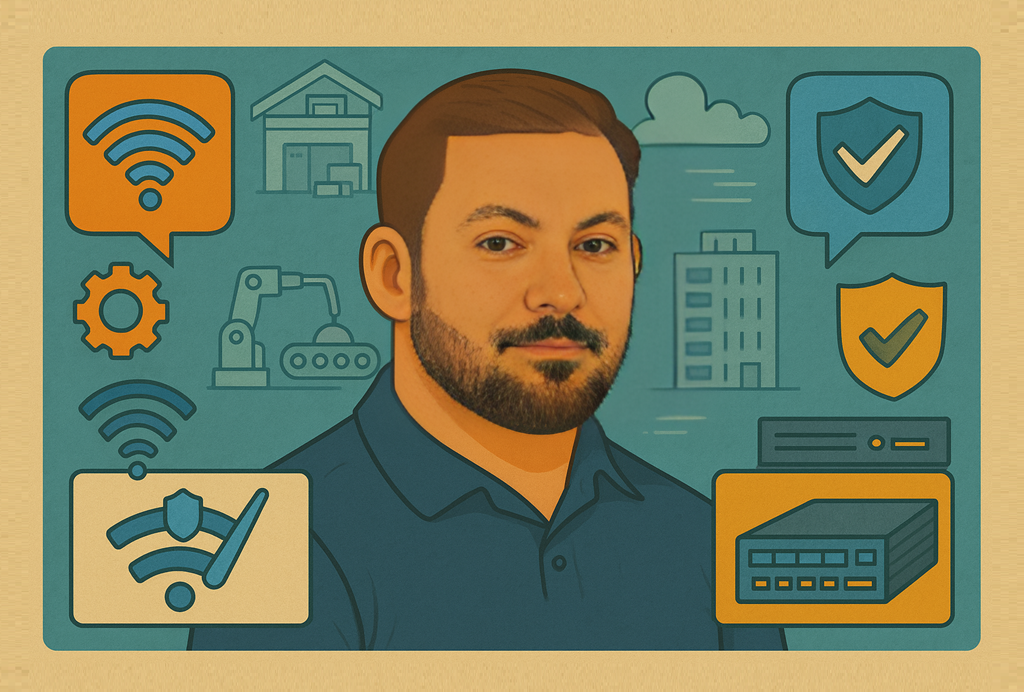
Designing a modern network isn’t just about pushing packets anymore. It’s about understanding the environment, anticipating client behavior, and building with longevity and flexibility in mind, regardless of vertical. Whether you're working with a hotel, a warehouse, a smart apartment block, or a manufacturing facility, the fundamentals are the same: coverage, capacity, control, and clarity.
Here’s a breakdown of sector-specific insights, with technical considerations and real-world tips that have worked for me and no vendor buzzwords required.
🏨 Hospitality: Seamless Experience with Heavy Roaming
In hospitality, you’re dealing with the most unpredictable mix of devices: old iPhones, new Androids, cheap tablets, smart TVs, VoIP handsets, and the occasional Wi-Fi-based door lock. Roaming is constant, so the network needs to anticipate movement before the client does.
Best Practices:
-
Use room-based AP deployments over hallway placements. Hallway APs can work, but only when you have solid wall attenuation data and can validate with a survey.
-
Plan for fast, secure roaming using standards like 802.11r/k/v. Don’t just turn them on, understand how your client mix responds.
-
Apply QoS policies for real-time applications like voice and IPTV.
-
Ensure VLAN segmentation supports both guest isolation and back-of-house operations, but don’t overcomplicate tagging unless your hardware supports it efficiently.
🏭 Manufacturing & Logistics: Harsh RF and Constant Movement
Industrial environments are a nightmare for RF. Reflective surfaces, heavy machinery, and moving vehicles like AGVs or forklifts make coverage consistency a serious challenge. Add in outdated 2.4 GHz-only clients, and you’ve got a real design test.
Best Practices:
-
Choose directional antennas for high-reflective zones to isolate coverage and reduce scatter.
-
Mount APs to solid structures like support columns, not cable trays or machines.
-
Validate with active and passive surveys in live environments. Static predictive models won’t catch real-world interference from moving assets.
-
Plan for redundancy in power and cabling. One bad patch cord shouldn’t knock out coverage for an entire zone.
🏢 Smart Buildings & MDUs: User Isolation Meets Flexibility
Residents in MDUs or tenants in commercial real estate expect home-like networks with enterprise-grade reliability. They want to stream, game, work remotely, and onboard devices without calling the help desk.
Best Practices:
-
Use a tenant portal (or onboarding platform) to simplify device onboarding while maintaining segmentation.
-
Allocate private VLANs or subnets per tenant or unit to keep traffic isolated.
-
Don’t ignore wired security. Disable unused ports, enforce port security or 802.1X where feasible, and keep console ports protected.
-
For Wi-Fi, consider APs per unit or per floor depending on density and wall attenuation. Use real survey data, not assumptions.
🔐 Wired Network Foundation: Security Starts at Layer 1
All the wireless tuning in the world won’t save you if your switches are a mess or physically exposed. Modern wired networks must be treated with the same design scrutiny as wireless, particularly with the growth of IoT and edge devices.
Best Practices:
-
Disable unused ports. Use jack locks or secured faceplates in public or uncontrolled areas.
-
Enforce VLAN pruning to limit broadcast domains and reduce lateral movement opportunities.
-
Use MACsec or 802.1X with dynamic VLAN assignment where supported.
-
Separate management and user traffic physically or logically. A confined VLAN for management ports can prevent accidental (or intentional) access.
🔄 Validation and Ongoing Optimization
Whatever the sector, validation isn’t optional. Too many networks are deployed based on assumptions and left untouched until problems arise.
Best Practices:
-
Validate deployments with a mix of passive, active, and spectrum analysis. Sidekick-style tools help, but you need someone who knows how to interpret the data.
-
Set a baseline and perform regular health checks, especially after renovations or device rollouts.
-
Review application usage and roaming performance. A low RSSI issue might just be a roaming threshold problem, not a coverage one.
Final Thoughts
Designing networks today is less about choosing “the right vendor” and more about understanding the environment and the people in it. That’s where experience, proper planning, and a dose of real-world perspective make all the difference.
If you build it right and validate it properly, the technology almost becomes invisible and that’s the real goal.
No Comments